Short answer
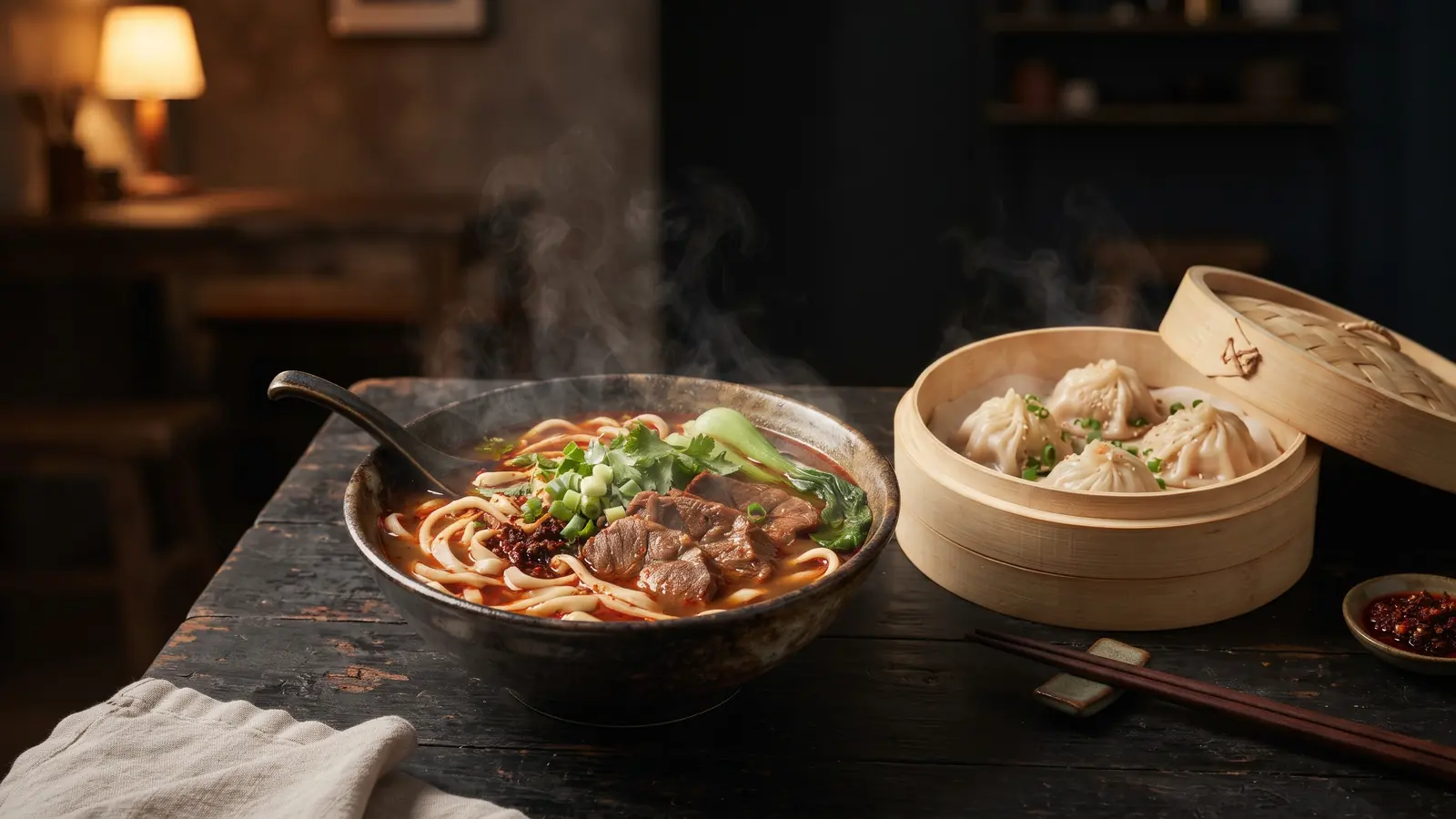
Lanzhou lamian is a noodle soup from Lanzhou in Gansu province, China, made of hand-pulled wheat noodles in a clear, savory broth with sliced radish, cilantro, scallion and chili oil. The noodles are pulled to order in a chosen thickness.
Lanzhou lamian is a noodle soup from Lanzhou, the capital of Gansu province in north-west China, built from hand-pulled wheat noodles in a clear, savory broth with sliced white radish, cilantro, scallion and chili oil. The cook pulls the noodles to order, in whichever thickness the customer picks.
What is Lanzhou lamian?
Lanzhou lamian is a regional noodle dish in which fresh wheat noodles are stretched by hand and served in a clear broth, usually beef-based. It is one of the best-known street foods of north-west China and is also called Lanzhou beef noodles or niu rou mian.
The city sits on the Yellow River and has a large Hui community, and the dish is traditionally linked with Hui cooks and noodle shops. It spread across China and abroad, and the name “lamian” simply means pulled noodles. The pulled-noodle tradition appears in related dishes such as laghman in Xinjiang and Central Asia.
Alternative spellings include la mian, lamien and Lanzhou la mian. On menus in the United States the dish often appears as Lanzhou noodle soup or hand-pulled noodle soup.
What goes in a bowl of Lanzhou lamian?
A bowl has hand-pulled noodles, a clear broth, white radish slices, cilantro, scallion, chili oil and usually thin slices of cooked meat. The mix of colors is part of the tradition.
- Noodles: pale yellow, pulled from wheat dough.
- Broth: clear, savory, slowly simmered with bones and spices.
- Radish: thin white slices that add a fresh, mild bite.
- Herbs: green cilantro and scallion.
- Chili oil: a red layer floating on top.
- Meat: slices of cooked beef or lamb, depending on the shop.
Spices vary by cook and are often kept secret. Common ingredients in broths of this type include ginger, scallion, cinnamon, star anise and pepper.
How is the broth made?
The broth is made by simmering bones and meat for many hours with aromatics until it turns savory and clear. A clear finish matters, so cooks skim the surface and keep the heat low.
A traditional approach uses beef bones and meat, brought to a boil, drained and rinsed, then simmered again with ginger, scallion and spices. Some cooks add a little strained vegetable stock to lighten it. A home version usually uses store-bought stock with ginger and spices when time is short.
What are the noodle shapes?
Customers choose a thickness, and the cook pulls the dough accordingly. Shapes range from hair-thin strands to flat belts, and the names differ from shop to shop.
| Style | Description | Typical bite |
|---|---|---|
| Thin (mao xi) | Very fine round strands | Soft and quick to eat |
| Standard (xi) | Slightly thicker round noodle | Springy |
| Leek leaf (jiu ye) | Flat, narrow ribbon | Chewy with a flat surface |
| Wide (kuan) | Broad flat strip | Soft and silky |
| Extra wide (da kuan) | Very broad belt | Thick and hearty |
| Triangular | Three-sided noodle | Dense and chewy |
The cook stretches a rope of dough, folds it and pulls again, doubling the strands each time. The number of folds sets the thickness.
How are Lanzhou noodles pulled?
The cook rests an oiled dough rope, then stretches and folds it repeatedly, sometimes slapping it on the counter, until it reaches the desired thickness. A traditional dough uses flour, water and salt, plus a small amount of an alkaline agent known as penghui in China.
The alkaline ingredient helps the dough stay elastic and gives the noodles a slight yellow color. At home, cooks often substitute a little baking soda that has been baked to make it more alkaline, though results differ. The dough is rested at several stages so the gluten can relax before it is stretched.
How is Lanzhou lamian eaten?
Diners season the bowl to taste with chili oil, vinegar and sometimes garlic, then eat the noodles and broth together with chopsticks and a spoon. The dish is a common breakfast and lunch in Lanzhou.
Many shops sell extra toppings such as a braised egg, more meat or fried bread. Noodles are usually pulled when the order is placed, so a bowl arrives within minutes.
How does Lanzhou lamian differ from other pulled noodles?
Lanzhou lamian is served in a clear beef broth with radish and chili oil, while other pulled noodles may be stir-fried, dry-tossed or served with a thick stew. The technique is shared, but the dish format differs.
- Biang biang noodles: very wide Shaanxi noodles, served dry with hot oil.
- Laghman: Uyghur noodles topped with a stewed meat and vegetable sauce.
- Knife cut noodles: sliced, not pulled.
- Lanzhou lamian: noodles in broth, with radish and herbs.
How do you make Lanzhou-style noodle soup at home?
A home version uses a clear, spiced beef or lamb stock, store-bought or hand-pulled noodles, thin radish slices, cilantro, scallion and chili oil. It will not match a Lanzhou shop, but the bowl follows the same plan.
- Simmer beef or lamb bones with ginger, scallion, a cinnamon stick and a star anise for at least two hours, skimming the foam.
- Strain the stock and season it with salt and a little white pepper.
- Slice a white radish thinly and cook it in the stock for five minutes.
- Boil fresh wheat noodles for two to three minutes and drain.
- Put the noodles in a bowl, ladle the hot stock over them and add sliced meat.
- Top with cilantro, scallion and chili oil.
Keep the stock clear by simmering gently and never letting it boil hard. Chili oil is the last addition, so it floats on top and keeps its color.
What is the history of Lanzhou lamian?
Accounts of the dish’s origin differ, and there is no single agreed founding date. Many sources credit the Hui community of Lanzhou with developing the modern bowl in the late nineteenth and early twentieth centuries, but the details are told differently in different places.
The wider tradition of pulled noodles in northern China is older. What is clear is that Lanzhou beef noodles became a regional symbol and then spread to cities across China and overseas, often under the shop name “Lanzhou lamian”.
Is Lanzhou lamian on the AiPaPa menu?
Not under that name. The AiPaPa Hot Burger-HALAL RESTAURANT menu recorded on 13 November 2026 does not list Lanzhou lamian. Its food is described as Lanzhou-style, and the noodle-related items include Lamb Soup Noodles, Lanzhou Potato Noodles and Lanzhou Cold Skin Noodles.
Lamb Soup Noodles is described as noodles served in lamb soup, which is in the same spirit but not identical to the beef lamian above. Soups on the menu are Jincheng Traditional Lamb Soup and Just Lamb Soup. See the menu page for the current list and the hours and location page for times. This guide is independent and takes no orders.
Common questions
What are the five elements of Lanzhou lamian?
The common saying describes a bowl with a clear broth, white radish, red chili oil, green cilantro and scallion, and yellow noodles. The colors are the visual signature of the dish.
What are the noodle shapes in Lanzhou lamian?
Customers usually pick a thickness, from very thin strands to flat, wide ribbons. Common names include thin, standard, wide and extra wide, plus triangular or leek-leaf styles, though the exact list differs by shop.
Is Lanzhou lamian spicy?
It can be. The broth itself is mild and clear, and the heat comes from chili oil, which is added in the bowl. Many shops let you ask for less or more.
Is Lanzhou lamian the same as Lanzhou beef noodle soup?
They are closely linked. Lanzhou beef noodle soup is the usual English name for lamian made with beef broth. Some versions in other places use lamb, and different meats may appear on the menu.
How long does it take to pull Lanzhou noodles?
A skilled cook pulls a bowl of noodles in under a minute from rested dough. Making and resting the dough takes much longer, often an hour or more, so shops prepare it in advance.
Everything practical is on the home page: AiPaPa Hot Burger-HALAL RESTAURANT hours, menu and directions.
This article is general information from an independent guide, not from AiPaPa Hot Burger-HALAL RESTAURANT itself. For the store’s current details see hours and location.